
JD(U) MP Sanjay Kumar Jha has appealed to the External Affairs Minister S Jaishankar to ensure the safety and well-being of the Bihari diaspora in West Asia, following escalating tensions in the region.

Rising study-abroad costs are prompting families to use education loans strategically while preserving savings, liquidity and long-term financial stability, says Yogesh Rawat

India has strongly condemned the recent terror attacks in Mali, including the death of the country's defence minister, and reiterated its commitment to combating terrorism.

External Affairs Minister Sushma Swaraj arrived in Colombo on Friday on a two-day trip to set the stage for Prime Minister Narendra Modi's visit to Sri Lanka next week, the first bilateral visit to the country by an Indian premier in over 25 years.

India has criticised US President Donald Trump's social media repost referring to India and other countries as 'hellholes' in the context of immigration, deeming the remarks 'uninformed' and 'inappropriate'.

India has strongly criticised China's practice of assigning 'fictitious names' to areas within Indian territory, stating that such actions are futile attempts to alter reality and negatively impact efforts to normalise bilateral relations.

US Secretary of State Marco Rubio arrived in Kolkata for a four-day diplomatic tour to India, marking the first visit by a US secretary of state to the city in 14 years. His itinerary includes meetings with Indian officials, energy talks, and a Quad Foreign Ministers Meeting.

It is plain to see that the US senate bill's real objective is to derail India's time-tested strategic partnership with Russia, points out Ambassador M K Bhadrakumar.

'We caught General Pervez Musharraf talking over the phone with his Chief of General Staff Lieutenant General Mohammad Aziz. Musharraf was visiting China; Aziz was in Rawalpindi.'

In response to the Quad ministers' joint statement, China on Tuesday said it opposes the creation of exclusive 'small cliques' and 'bloc confrontation'.
India has strongly condemned Pakistan's air strikes within Afghan territory, emphasising the need to respect Afghanistan's sovereignty and territorial integrity following civilian casualties and infrastructure damage.

India was on Friday accorded the vice presidency of the Financial Action Task Force (FATF), the global body that sets standards for combating money laundering and terrorist financing, for the first time.
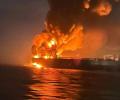
An oil tanker carrying 24 Indian seafarers reported a fire off the coast of Oman, with all crew members confirmed safe. The incident occurred amidst renewed hostilities between Israel and Iran, who exchanged attacks on petrochemical facilities.

The harsh truth is that the US is no longer a reliable partner, cautions Ramesh Menon.

For India, much is at stake: Crucial energy supplies traversing the Strait of Hormuz, the fate of its 10 million citizens living and working in West Asia -- who send generous remittances home -- and its major trade links with the region.

The Indian government is unlikely to allow a parliamentary debate on the West Asia crisis, citing prior briefings by the External Affairs Minister. This decision comes amid opposition protests and a pending no-confidence motion against the Speaker.

National Security Advisor Ajit Doval hosted Bangladesh Foreign Minister Khalilur Rahman for a dinner meeting, signalling efforts to repair bilateral ties after a period of heightened diplomatic tension.

The body of Naren Dhar, an Indian Assistant High Commission Protocol Officer, was handed over to the Indian High Commission after his death in Chattogram, Bangladesh. Local authorities suspect no foul play, and a postmortem examination has been completed to determine the cause of death.

The Vishva Hindu Parishad (VHP) has appealed to the United Nations to intervene on behalf of religious minorities in Pakistan and Bangladesh, citing human rights violations.

India and the US are reportedly exploring a potential meeting between Prime Minister Narendra Modi and US President Donald Trump on the sidelines of the G7 summit in France next week, aiming to rebuild bilateral ties after recent tensions.
Pakistan has rejected India's criticism of its military campaign in Afghanistan, calling India's statement 'baseless' and 'misleading'.

Gangster Sahil Chauhan, wanted in multiple cases and subject to an Interpol Red Notice, has been deported from Thailand to India. He was apprehended in Bangkok and brought back to India, where he faces numerous criminal charges.

The Ministry of External Affairs informed a parliamentary committee that nearly 1,000 Indians remain in Iran amidst the West Asia conflict, and 23,000 students in the Gulf region missed CBSE exams due to the turmoil.

India summoned the Iranian envoy after two Indian vessels had to reverse course in the Strait of Hormuz following an incident of firing by Iran's Revolutionary Guards.
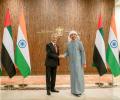
Frankly, was it really necessary in the middle of a fratricidal war for External Affairs Minister S Jaishankar to travel to Abu Dhabi for a one-on-one with the sheikh on April 12?Or, for National Security Advisor Ajit Doval to follow up on April 26? Or, for PM Narendra Modi to follow through today? There are no easy answers, notes Ambassador M K Bhadrakumar.

The Congress on Sunday lashed out at Prime Minister Narendra Modi over the US' statements after three Indian sailors were killed in American attacks on ships, with party leader Rahul Gandhi saying the "compromised PM" listens "like an obedient servant" and "complies with the orders".
The Sports Ministry has directed the Indian Olympic Association (IOA) to form an independent inquiry panel to investigate sexual harassment allegations made by former hockey player Asunta Lakra. This decision came after Hockey India President Dilip Tirkey expressed concerns about the impartiality of an internal probe, as the allegations involve HI office bearers.

An Indian couple from Gujarat was dramatically rescued from kidnappers in Azerbaijan after intervention by the Ministry of External Affairs.

Prime Minister Narendra Modi and US President Donald Trump exchanged pleasantries and held a brief conversation at the G7 summit, their first in-person encounter in 16 months, setting the stage for high-stakes bilateral talks amidst continuing strain in India-US relations.

The escalating crisis in West Asia and its impact on the global energy supply chain are expected to dominate deliberations at a two-day meeting of BRICS foreign ministers to be hosted by India.

The Indian government has addressed Parliament regarding a case of an Indian national seeking repatriation from Russia due to the situation in West Asia and the Gulf region. The government also responded to queries about Indian nationals denied entry to South Korea and seafarers detained in foreign countries.

As Shastri Bhawan nears demolition, one of Delhi's most iconic government buildings leaves behind six decades of stories, power, journalism and public life.

US Secretary of State Marco Rubio will visit India from May 23-26 to enhance cooperation in trade, defence, and energy, attending meetings with senior Indian officials and participating in a Quad group meeting in New Delhi.

External Affairs Minister S Jaishankar raised India's concerns with US Secretary of State Marco Rubio regarding changes to US visa and immigration policies, emphasising that legal mobility should not be negatively affected. Rubio acknowledged potential 'bumps' during the transition as the US aims to improve its immigration system.

Trump further alleged that Iran was behind the attacks on three vessels carrying Indian seafarers near the Hormuz Strait, which resulted in the deaths of three, despite the US Central Command having confirmed that the strikes were carried out by American naval forces, calling the incident "totally unacceptable."

Amidst rising Middle East tensions, External Affairs Minister S Jaishankar highlights India's strategic dialogue with Iran to safeguard maritime traffic through the Strait of Hormuz, ensuring India's energy security and continued oil trade.

Prime Minister Narendra Modi and US President Donald Trump are set to hold comprehensive talks focusing on a bilateral trade deal, defence cooperation, and energy and critical minerals sectors during the G7 summit in Evian-les-Bains, France.
India has expressed its gratitude to Portugal for its cooperation in the extradition of fugitive Abhay Rana, wanted in multiple criminal cases. The extradition marks a significant step in India's efforts to bring back criminals residing abroad.

One Indian oil tanker successfully crossed the Strait of Hormuz, while others turned back after Iran signalled the waterway's closure, amidst rising tensions and disruptions to global energy flows.

India and China held constructive talks on the situation along the Line of Actual Control (LAC) in eastern Ladakh, emphasising that maintaining border peace and tranquillity enabled progress in normalising overall relations.
